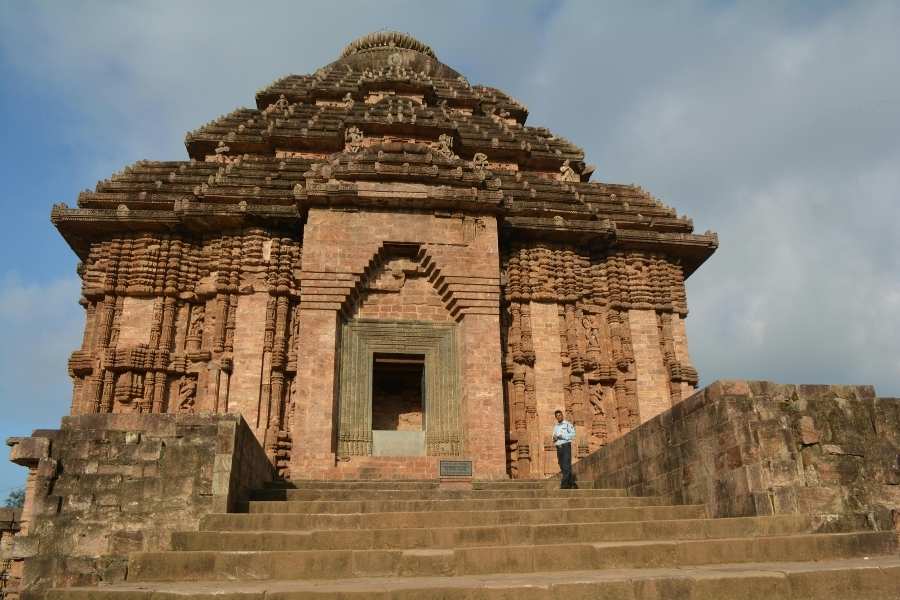
Ancient Engineering Marvels blow your mind when you really think about it. Picture this: you’re standing in front of massive stone structures that were built before anyone had invented the wheel, yet they’re still here while your neighbor’s fence falls over in a windstorm. These incredible ancient structures make you wonder if maybe we’ve been doing construction all wrong this whole time.
What gets me every time is how these ancient builders just said “hold my beer” and proceeded to move rocks that weigh more than freight trains. No cranes, no bulldozers, just pure human stubbornness and some seriously clever thinking. The crazy part? Many of these mind-blowing architectural feats are in better shape than buildings from the 1970s. Makes you wonder what they knew that we forgot somewhere along the way.
Think about it this way: your great-great-great (add about 200 more greats) grandparents figured out engineering problems that still make today’s architects scratch their heads. They built stuff that would make modern project managers weep with envy. And they did it all while dealing with political drama, plagues, and probably terrible coffee.
The Great Pyramid of Giza: Ancient Engineering Marvels That Touch the Sky
Here’s the thing about the Great Pyramid that’ll mess with your head. You know those IKEA instructions that leave you crying on the floor surrounded by mysterious leftover screws? Well, ancient Egyptians built this colossal pyramid structure with precision that would make a Swiss watchmaker jealous.
Picture 20,000 workers showing up every day for two decades. No coffee breaks, no union disputes, just pure determination to stack 2.3 million stone blocks into the world’s most impressive pile. Each block weighs about as much as your car, except they had to lift them 500 feet in the air using nothing but ramps, ropes, and what I imagine was some very creative cursing.
The math behind this thing is bonkers. Ancient Egyptians somehow built it so perfectly aligned with true north that modern GPS systems can barely match their accuracy. They calculated angles and measurements that wouldn’t be formally “discovered” by mathematicians for thousands of years. Either they were incredibly lucky, or they knew something we’re still trying to figure out.
The Mind-Bending Numbers Game
Get this: the pyramid’s measurements contain the mathematical constant pi, and nobody can agree if this was intentional or the universe’s biggest coincidence. The perimeter divided by the height gives you 2?, which sounds impossible until you remember these same people invented geometry while the rest of the world was still figuring out fire.
Every measurement seems to connect to something else. The base perimeter equals the circumference of a circle whose radius is the pyramid’s height. The weight of the pyramid multiplied by a billion equals Earth’s mass. At some point, you start wondering if ancient Egyptians were just showing off.

Roman Aqueducts: Ancient Engineering Marvels That Actually Worked
Romans didn’t mess around when it came to brilliant water engineering. While everyone else was carrying buckets from the nearest stream, Romans built water highways that delivered fresh mountain water to cities hundreds of miles away. They basically invented the concept of “why walk when you can build an engineering marvel instead?”
The Pont du Gard in France looks like someone challenged ancient engineers to build the most beautiful way possible to move water across a valley. This isn’t just functional; it’s gorgeous. Three levels of arches that seem to dance across the landscape, carrying enough water daily to supply a small modern city.
Romans figured out how to make water flow uphill, around mountains, and through valleys using nothing but gravity and some seriously smart thinking. They maintained gradients so gentle you’d need a level to detect them, yet water flowed consistently for centuries. Modern engineers study these ancient infrastructure marvels like they’re trying to crack some lost code.
When Ancient Beats Modern
Here’s what’s embarrassing for us modern folks: many Roman aqueducts still work perfectly after 2,000 years. Meanwhile, we’re lucky if our city’s water pipes last 50 years without major repairs. Romans mixed concrete that gets stronger with age, while our stuff starts crumbling before the construction crews pack up their equipment.
They understood water pressure, flow dynamics, and hydraulic engineering without any of the fancy math we use today. They just observed, experimented, and built things that worked. Then kept working. For millennia. Makes you wonder what we’re overcomplicating these days.
Petra’s Rose City: Ancient Engineering Marvels Carved in Stone
The Nabataeans looked at a bunch of rocks in the middle of nowhere and thought, “You know what this desert needs? A spectacular city carved directly into these cliffs.” And somehow, they pulled it off in a way that still drops jaws today.
Walking through the Siq toward the Treasury feels like the world’s best magic trick. The narrow canyon walls close in around you, building suspense, until BAM! You’re face-to-face with this stunning rock-carved architecture that seems impossible even by today’s standards. It’s like ancient Instagram, designed purely to make visitors go “Holy moly, how did they do that?”
But the real genius wasn’t the pretty facades. Petra sits in one of the harshest deserts on Earth, yet the Nabataeans turned it into a thriving metropolis. They carved an entire water management system into solid rock, creating cisterns, channels, and distribution networks that would make modern urban planners envious.
Desert Water Wizardry
These people were water magicians. They figured out how to capture every drop of occasional rainfall and store it underground in massive carved reservoirs. Their ingenious water collection systems included settling tanks that removed sand and debris, overflow channels that prevented flooding, and distribution networks that supplied thousands of people.
The engineering was so sophisticated that Petra supported major trade routes for centuries. Merchants knew they could cross the desert and find fresh water, food, and shelter in this impossible city. All because some ancient engineers refused to accept that deserts couldn’t support urban civilization.
Angkor Wat: Ancient Engineering Marvels of Mind-Blowing Scale
Forget everything you think you know about medieval engineering. The Khmer Empire looked at the Cambodian jungle and decided to build not just a temple, but an entire hydraulic civilization that supported over a million people. We’re talking about massive ancient urban planning that rivals modern metropolitan areas.
Angkor Wat itself is just the crown jewel of a water management system that spanned hundreds of square miles. The West Baray reservoir alone held enough water to supply a modern city, and they built it using 12th-century technology. They redirected rivers, created artificial hills, and designed flood control systems that kept everything running smoothly for over 600 years.
The temple doubles as both religious monument and engineering textbook. Every gallery, courtyard, and moat serves spiritual purposes while demonstrating advanced understanding of hydraulics, architecture, and urban planning. It’s like they built a functioning model of the universe that actually worked as a city.
Engineering on an Epic Scale
The sheer size of Angkor’s infrastructure boggles the mind. We’re talking about moving millions of tons of earth and stone to create reservoirs larger than many natural lakes. The main temple complex covers more ground than Vatican City, and that’s just a tiny fraction of the overall urban area.
What’s really impressive is how they integrated everything. Religious architecture, water management, agriculture, and urban planning all worked together seamlessly. Their revolutionary hydraulic engineering created a sustainable civilization that thrived in tropical conditions that challenge modern cities.
Machu Picchu: Ancient Engineering Marvels Defying Gravity
The Inca looked at a practically vertical mountain peak and thought, “Perfect spot for a city!” Then they actually built one up there using construction techniques that make modern engineers weep with confusion and admiration.
Getting to Machu Picchu today involves trains, buses, and lots of complaining about the altitude. The Inca built an entire city up there using nothing but human power and some seriously impressive advanced stone-cutting techniques. They carved granite blocks so precisely that you can’t fit a credit card between the joints, and they did it without metal tools.
The agricultural terraces alone represent a masterclass in mountain engineering. Each level required perfect drainage, soil composition, and microclimate control to grow crops at 8,000 feet above sea level. They turned a hostile mountain environment into productive farmland that fed the entire population.