
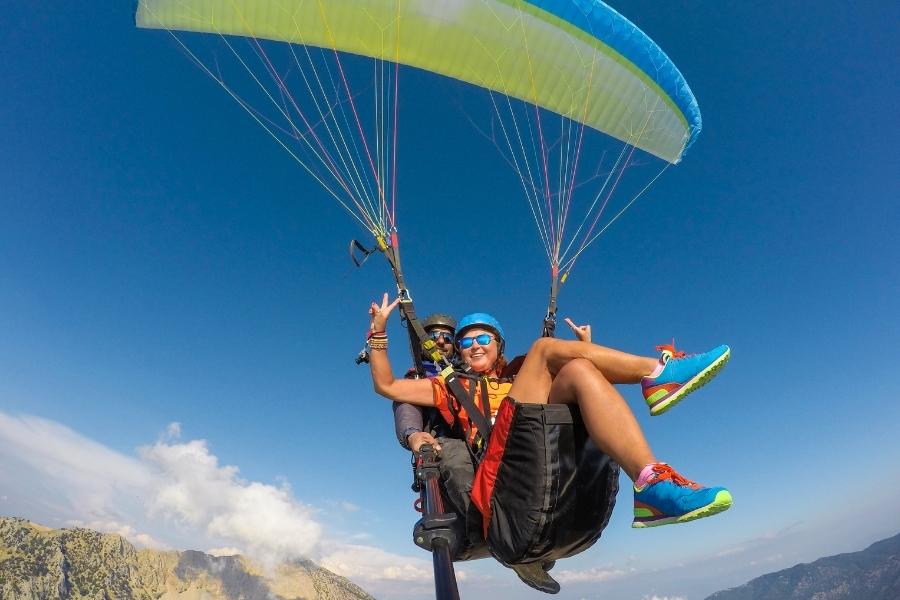
Paragliding for beginners might sound crazy at first. You’re basically strapping fabric wings to your back and jumping off mountains. But here’s the thing – thousands of people do it safely every year, and most can’t stop grinning afterward.
Your first flight will probably make you question your sanity. One minute you’re nervously adjusting your harness, the next you’re floating above treetops like some kind of wingsuit-wearing superhero. The ground shrinks below while your heart pounds with pure adrenaline.
The catch? Not all paragliding spots treat beginners the same way. Some places will coddle you with perfect conditions and patient instructors. Others might throw you into thermals that bounce you around like a ping-pong ball. Guess which approach works better for building confidence?
Smart beginners pick their battleground carefully. You want hills that forgive mistakes, weather that behaves predictably, and instructors who remember being terrified newbies themselves. These magical locations exist, scattered across continents where geography and climate shake hands perfectly.
Think of it like learning to surf. You don’t paddle out to Pipeline on day one. You find gentle breaks with soft sand bottoms and forgiving waves. Learning to paraglide follows the same logic, except your mistakes happen hundreds of feet up instead of underwater.
Why Your First Paragliding for Beginners Spot Matters More Than You Think
Here’s what nobody tells you about paragliding training – location trumps everything else. The world’s best instructor can’t overcome sketchy weather or dangerous terrain. But mediocre instruction in perfect conditions? You’ll still learn safely and have a blast doing it.
Safe paragliding locations don’t happen by accident. Mother Nature needs to cooperate on multiple fronts. Smooth airflow without nasty surprises. Predictable weather patterns that instructors can read three days out. Landing zones bigger than postage stamps where nervous students won’t accidentally hit trees.
Bad first experiences haunt pilots for years. Ask anyone who learned in gusty conditions or got dragged across a rocky field during landing. They’ll tell you horror stories that make beginner paragliding sound like extreme sport Russian roulette. Don’t be that person.
Great training sites feel almost boring at first. The wind whispers instead of howling. Takeoffs happen from grassy slopes, not cliff edges. You might even feel slightly disappointed by how controlled everything seems. Trust us – there’s plenty of time for adventure once you master the basics.
Professional schools cluster around certain spots for obvious reasons. They’ve watched hundreds of students progress from wobbly first flights to confident pilots. They know which conditions build skills versus which ones build therapy bills.
France: Where Paragliding for Beginners Actually Started Making Sense
France didn’t just invent modern paragliding – they perfected teaching it too. French pilots were doing this stuff back when everyone else thought they were certifiably insane. Now their training methods get copied worldwide because, frankly, they work.
Chamonix Valley might intimidate you at first glance. Those massive peaks look serious enough to swallow small aircraft whole. But here’s the secret – local schools know exactly which hills work for beginners versus which ones challenge world champions. You’ll start gentle and work up gradually.
The Annecy region looks like Disney designed it specifically for paragliding beginners. Crystal lakes, perfect mountains, weather that cooperates more often than not. Students here progress faster because they’re not fighting conditions every day. Plus, crashing into a lake beats hitting rocks any day.
Saint-Hilaire-du-Touvet turns out more certified pilots than anywhere else on Earth. Their training hill sees more action than a busy airport runway. The repetition pays off – instructors here have seen every possible mistake and know exactly how to fix them quickly.
French instruction emphasizes technique over thrills. You’ll spend more time perfecting ground handling and understanding weather than taking Instagram-worthy flights. Boring? Maybe. Effective? Absolutely. Your flying career will thank you later when muscle memory kicks in during sketchy situations.
Switzerland: Engineering Perfect Paragliding for Beginners Programs
Swiss paragliding schools approach teaching like they build watches – with obsessive attention to detail and zero tolerance for shortcuts. Their systematic methods might seem rigid, but they produce consistently safe pilots who rarely develop bad habits.
Interlaken sits between two lakes that create their own weather microclimates. Sounds complicated, but experienced instructors use this to their advantage. When one area gets too thermic for beginners, they simply move to calmer spots. Options keep training days productive regardless of conditions.
Grindelwald valley offers multiple elevations for progressive training. Low sites for nervous first-timers, higher launches for building confidence. Students naturally advance through difficulty levels without feeling pushed beyond their comfort zones. The Jungfrau backdrop doesn’t hurt either.
Davos specializes in high-altitude training that teaches mountain flying principles early. Students learn to read terrain and understand how elevation affects performance. These skills prove invaluable later when flying in unfamiliar locations or challenging conditions.
Swiss certification carries weight worldwide. Other countries recognize their training standards because graduates consistently demonstrate solid fundamentals and conservative decision-making. That reputation opens doors for traveling pilots everywhere.
Austria: Alpine Precision Meets Paragliding for Beginners Adventure
Austrian paragliding instruction combines German thoroughness with Alpine accessibility. Students get comprehensive training without feeling like they’re attending engineering school. The balance produces confident pilots who actually enjoy flying instead of just surviving it.
Salzburg region provides incredible diversity within short distances. Morning flights from gentle hills, afternoon sessions at more challenging sites. Students experience various conditions during training instead of getting comfortable with just one scenario. Adaptation skills develop naturally.
Tyrol region near Innsbruck offers year-round flying that teaches seasonal differences. Winter flying in stable air builds precise control skills. Summer thermals introduce energy management and lift utilization. This comprehensive exposure creates versatile pilots ready for anything.
Kössen valley has perfected beginner paragliding progression through decades of refinement. Their training sequence builds skills logically while maintaining safety margins. Students often comment on how natural their development feels compared to rushed programs elsewhere.
Austrian instructors tend toward conservative teaching that emphasizes personal limits over pushing boundaries. Students learn when NOT to fly as much as when conditions look perfect. This judgment proves crucial for lifelong safety in the sport.
Italy: Passionate Teaching Meets Perfect Paragliding for Beginners Conditions
Italian paragliding schools bring Mediterranean enthusiasm to flight training without sacrificing professionalism. Their passionate approach helps nervous beginners overcome fears while building rock-solid technical foundations through repetitive practice.
Lake Garda region provides Europe’s most reliable beginner flying conditions. The massive lake generates its own weather patterns that create consistent thermals during peak season and calm air during training hours. Multiple launch sites offer options for any wind direction.
Bassano del Grappa combines legendary thermal conditions with dedicated training areas. Advanced pilots chase world records here, but beginners train separately in forgiving conditions. The Italian teaching philosophy emphasizes feel and instinct alongside technical knowledge.
Monte Cucco in Umbria offers spectacular countryside views during training flights. Students learn cross-country basics early, including navigation and decision-making skills needed for longer adventures. The progression from local soaring to cross-country preparation happens naturally here.
Italian instructors teach through demonstration and encouragement rather than lengthy technical lectures. Students spend more time actually flying and less time sitting in classrooms. The hands-on approach builds confidence faster than purely academic instruction.
